

When research gets trapped inside a tool, it effectively dies there. Decision-makers rarely open the dashboard; decisions happen in meetings, with a presentation on screen.
That’s why I’m so excited about this week’s new feature: ReveLumi now generates a PPT containing your research findings—ready to circulate and present.
We used our demo study on content discovery on Netflix to show how it looks. It’s based on 306 interviews conducted between May and November. The deck consists of ten slides:
the hypothesis and key research questions
a summary of insights, ranked by frequency
one slide per insight, featuring direct quotes from interviewees
the hypothesis weighed against the evidence—including any contradictory findings
opportunities, categorized into those to test and those to implement
suggestions for follow-up research
Each quote links back to the original conversation. In the presenter notes, the researcher explains why they selected that specific quote—so if someone asks, “But who said this?”, the presenter is already prepared with the answer.
You can also export a single slide containing an executive summary—perfect for an email to leadership or a message in your team’s communication channel.
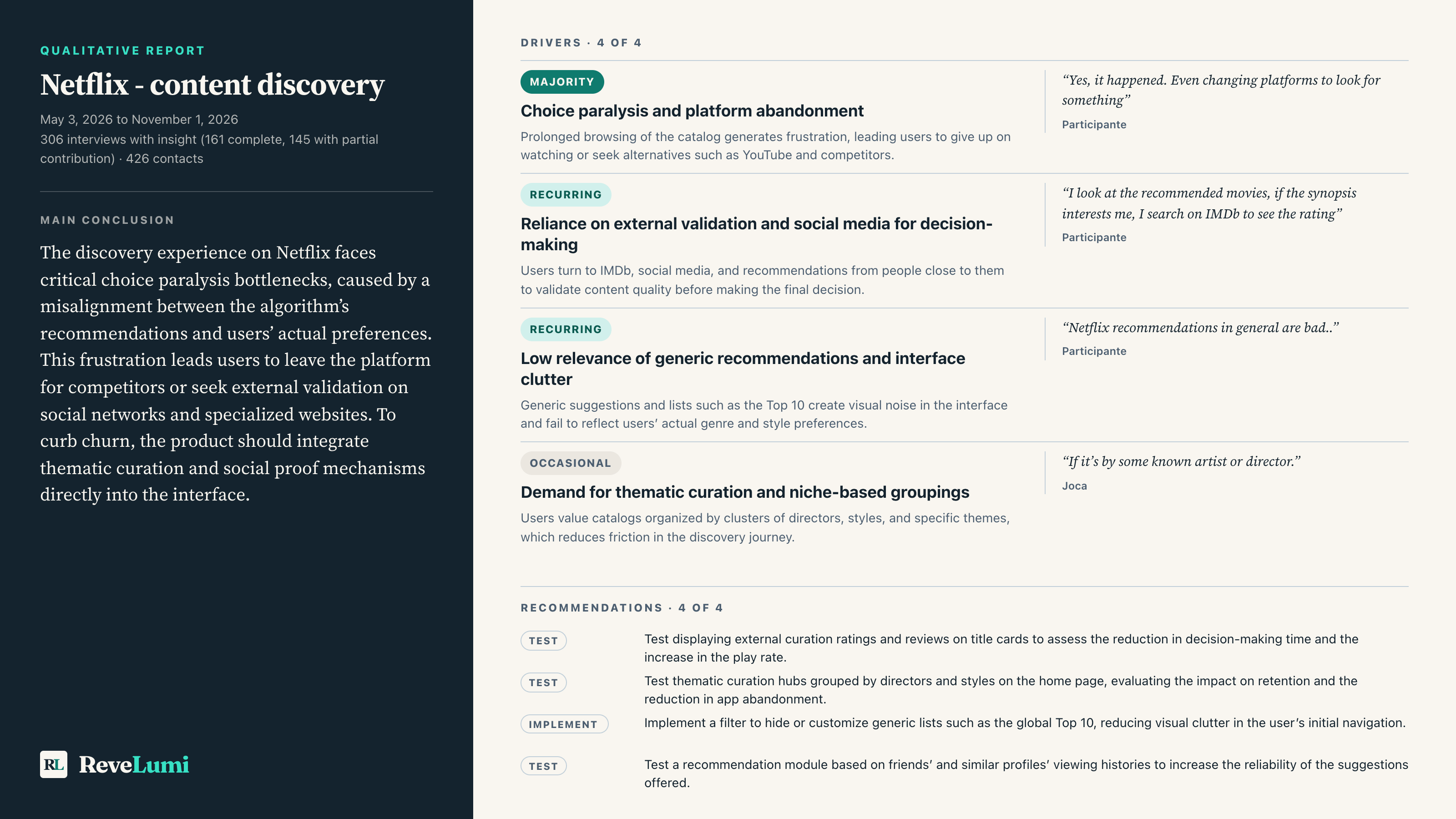
You can even customize the presentation with your company’s logo and brand colors. The report integrates seamlessly into your department’s materials, with no extra rework required.
And what did the Netflix study reveal? Most users scroll through the catalog until they eventually give up—sometimes switching over to YouTube instead. Many validate their choices outside the platform—on IMDb, TikTok, or by consulting people they trust. The hypothesis was confirmed: the interface fails to support these user strategies, which is the root cause of “choice paralysis.”
Want to see the full deck? You can find it here. And if you’d like to experience what it’s like to be interviewed by the agent, you can find the demo here.
If you’d like to discuss how to scale research at your company—whether for NPS, CSAT, or more in-depth qualitative research—simply book a time on our calendar.